Choosing the right trailer is crucial for safe and efficient hauling. Gooseneck and bumper pull trailers each have unique advantages, and understanding their differences helps you make the best choice.
The right trailer maximizes hauling capacity, ensures safety, and saves money, while the wrong one can cause challenges on the road. This guide will help you determine which to choose by comparing gooseneck vs. bumper pull trailers.
Understanding Gooseneck Trailers
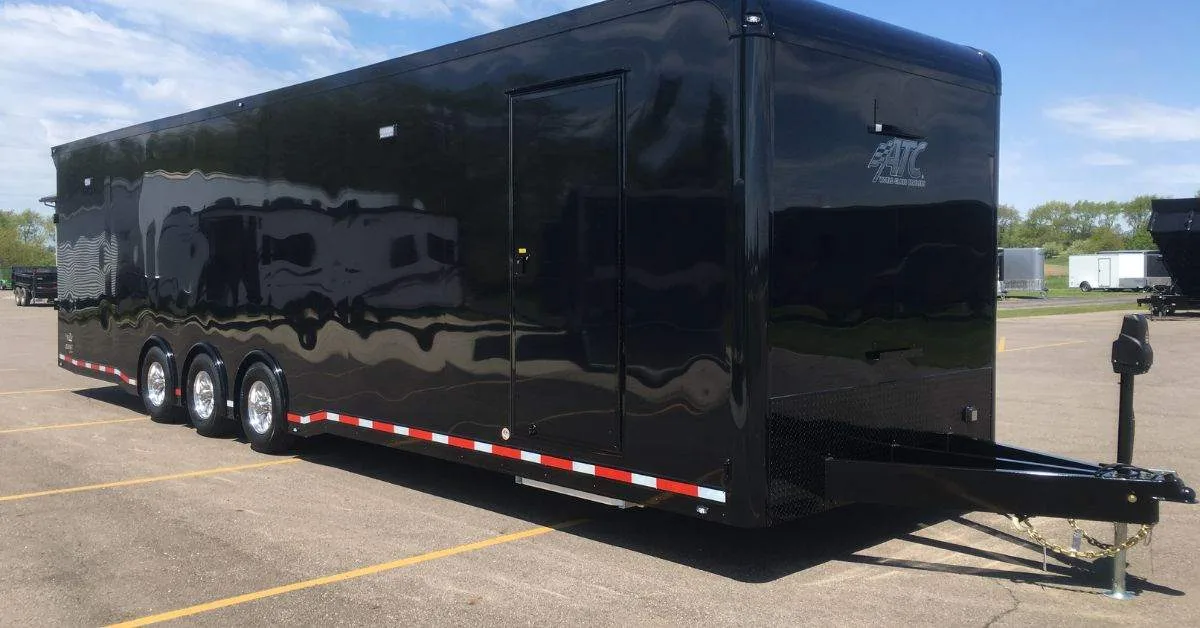
Gooseneck trailers connect to your truck through a hitch mounted in the truck bed, creating a distinctive curved neck that extends over the truck's rear axle. This unique design distributes weight differently than traditional trailers, placing the tongue weight directly over the truck's rear wheels rather than behind the vehicle.
Advantages of Gooseneck Trailers
- Superior Stability: The gooseneck design reduces trailer sway by positioning the pivot point above the truck's rear axle, improving control during curves, lane changes, and harsh road conditions.
- Higher Weight Capacity: Gooseneck trailers are designed to handle heavier loads, often exceeding 30,000 pounds, with ease. Their superior weight distribution makes them perfect for heavy-duty tasks or commercial use, offering strength and stability for demanding jobs.
- Enhanced Maneuverability: A shorter turning radius provides greater maneuverability, making it much easier to back up in challenging situations. This feature is handy when navigating through tight spaces such as job sites or storage areas.
Disadvantages of Gooseneck Trailers
- Special Hitch Requirements: Installing a gooseneck hitch requires cutting a hole in your truck bed, reducing resale value and versatility. Professional installation adds to the cost.
- Higher Initial Cost: Gooseneck trailers are pricier due to their specialized construction, higher weight capacity, and additional features.
- Vehicle Compatibility: Only pickups with adequate payload, rear axle weight ratings, and towing capacity are capable of safely handling gooseneck trailers. It’s essential to ensure that the vehicle meets these specifications to avoid potential safety issues while towing.
Ideal Applications for Gooseneck Trailers
Gooseneck trailers shine in commercial and agricultural applications where heavy loads are routine. Construction companies use them to transport heavy equipment like excavators and bulldozers. Farmers rely on gooseneck trailers for moving livestock, large hay bales, and farm machinery. Long-distance haulers appreciate the stability and fuel efficiency gains that come with the improved weight distribution.
Understanding Bumper Pull Trailers
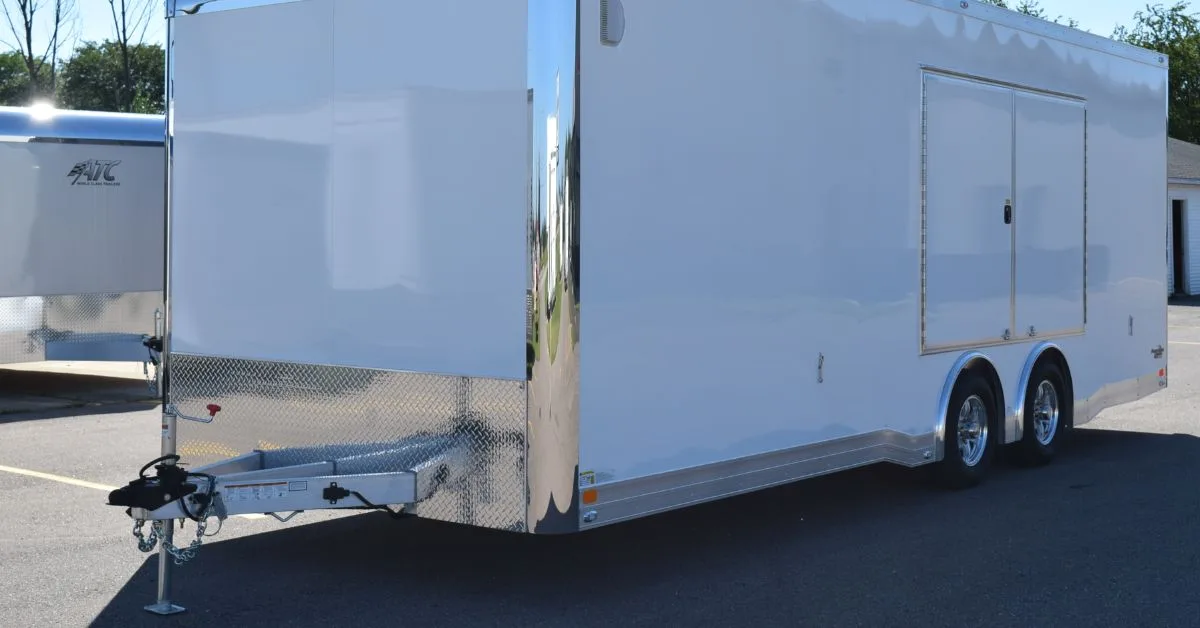
Bumper pull trailers, also known as tag-along trailers, connect to your vehicle through a hitch mounted on the bumper or frame at the rear of your towing vehicle. The trailer tongue extends behind your truck, creating leverage that affects how your vehicle handles during transport.
Advantages of Bumper Pull Trailers
- Easy to Connect: It’s quick and straightforward to hook up, thanks to its standard hitch design. This makes it the perfect option for beginners who want an easy and hassle-free experience.
- Affordable: It costs less than gooseneck trailers, making it a more affordable option. This provides excellent value, especially for new or occasional users.
- Versatile: This product is compatible with most SUVs, pickup trucks, and some cars. It can be installed easily without requiring any modifications.
Disadvantages of Bumper Pull Trailers
- Limited Weight Capacity: Bumper pull designs max out around 14,000 lbs due to tongue weight leverage, which can strain your vehicle's suspension and steering.
- Stability Issues: This vehicle is prone to swaying in crosswinds, which can make handling more challenging. The issue is especially noticeable near large vehicles due to the hitch-to-axle distance.
- Handling Impact: Tongue weight can reduce front-wheel traction, which has a direct impact on braking and steering. This loss of traction can also affect overall control, making it harder to handle the vehicle safely.
Ideal Applications for Bumper Pull Trailers
Bumper pull trailers work best for light to medium-duty applications. They're perfect for moving household items during relocations, transporting ATVs or motorcycles to recreational areas, or hauling landscaping materials for weekend projects. Small business owners often choose bumper pull trailers for local deliveries or service calls where convenience and lower cost outweigh heavy-duty capabilities.
Understanding the Key Differences
Gooseneck and bumper pull trailers have several key differences that make them suitable for different needs. Understanding these distinctions can help you choose the right trailer for your specific requirements.
- Hitch Type: Goosenecks mount in the truck bed with a ball hitch, while bumper pulls connect to the vehicle's frame or bumper.
- Weight Capacity: Goosenecks handle heavier loads (up to 25,000+ lbs) compared to bumper pulls (around 14,000 lbs).
- Stability: Goosenecks offer better tracking and reduced sway, while bumper pulls require more driver attention.
- Cost: Bumper pulls are cheaper upfront, but goosenecks may save on fuel and offer more features for frequent users.
Factors to Consider When Choosing Your Trailer
When choosing a trailer, it’s important to take several key factors into account. These considerations will help ensure you select the right trailer to meet your specific needs.
- Load requirements: Evaluate the weight and size of what you’ll haul now and in the future.
- Towing vehicle specs: Check towing capacity, payload rating, and whether you’re willing to modify your truck for a gooseneck hitch.
- Usage frequency and distance: Daily or long-distance use may justify a gooseneck, while occasional or local use may favor a bumper pull.
- Budget: Account for total costs, including hitch installation, modifications, insurance, and maintenance.
Customization Options for Both Trailer Types
Premier Custom Trailers specializes in designing gooseneck and bumper pull trailers tailored to your exact needs. Custom features include specialized decking, integrated tool storage, hydraulic systems, winch systems, and removable fenders for wide loads. These modifications ensure your trailer is built to handle your unique operational requirements.
Bumper pull trailers also benefit from upgrades like enhanced suspension, specialized flooring, integrated storage, and upgraded lighting. Custom paint schemes and graphics add a professional touch while promoting your business. With flexible custom construction, your trailer evolves with your needs, improving efficiency and professionalism.
Making the Right Choice for Your Needs
Selecting between gooseneck and bumper pull trailers comes down to matching the trailer's capabilities with your specific requirements. Heavy-duty commercial applications almost always favor gooseneck designs, while occasional personal use often works better with bumper pull trailers.
Ready to find the perfect trailer for your needs? Contact Premier Custom Trailers today to discuss your specific requirements and explore custom-built trailers that match your exact specifications. Our experienced team will help you design and build a trailer that exceeds your expectations and serves your needs.