
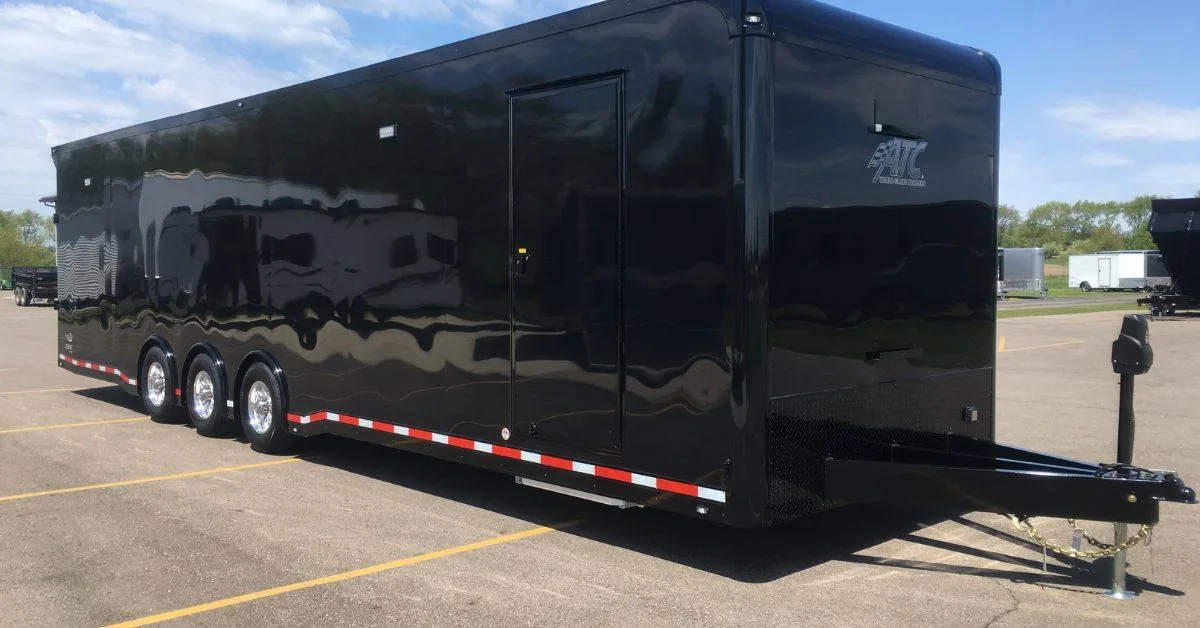
Transporting a scissor lift safely requires preparation, the right equipment, and proper procedures to protect your investment and ensure safety. With the right trailer and knowledge, you can move your scissor lift with confidence and efficiency. This explores how to safely transport your scissor lift, as well as tips for loading and unloading.
Choosing the Right Trailer for Your Scissor Lift
Selecting the right trailer is the first step in safely transporting your scissor lift. It's crucial to find one that matches your equipment's weight and dimensions to avoid safety risks, damage, or legal trouble. Premier Custom Trailers offers trailers specifically engineered for this purpose, with reinforced frames and proper weight ratings.
When selecting a trailer, first verify your scissor lift’s weight and dimensions, as they can vary significantly. Ensure the trailer’s weight capacity offers a safety margin above your lift's weight. The lift must also fit securely on the deck without overhanging.
Axle configuration is another key consideration, with single-axle trailers best suited for lighter lifts and tandem-axle models offering greater stability for heavier equipment. Consider your towing vehicle's capacity and typical travel distances when making your decision. Our 5x10 models are ideal for smaller lifts, while our 6x12 trailers are designed to accommodate larger equipment.
Safe Loading Procedures
Properly loading your scissor lift is critical for safe transport, so always take your time. Here are some key tips to remember for safe loading:
- Always use level ground and ensure your towing vehicle is connected correctly.
- Engage the parking brake and use wheel chocks when on an incline.
- Securely deploy ramps according to the manufacturer's instructions.
- Inspect ramps for damage, debris, or slippery conditions before loading.
- Clean ramps thoroughly to prevent slipping.
- Drive slowly and steadily up the ramps, maintaining straight alignment.
- Practice maneuvering your lift in an open area if its steering is unfamiliar.
- Position the lift for proper weight distribution, aiming for a slight front bias.
- Engage the scissor lift's parking brake and remove keys once positioned.
Securing the Scissor Lift
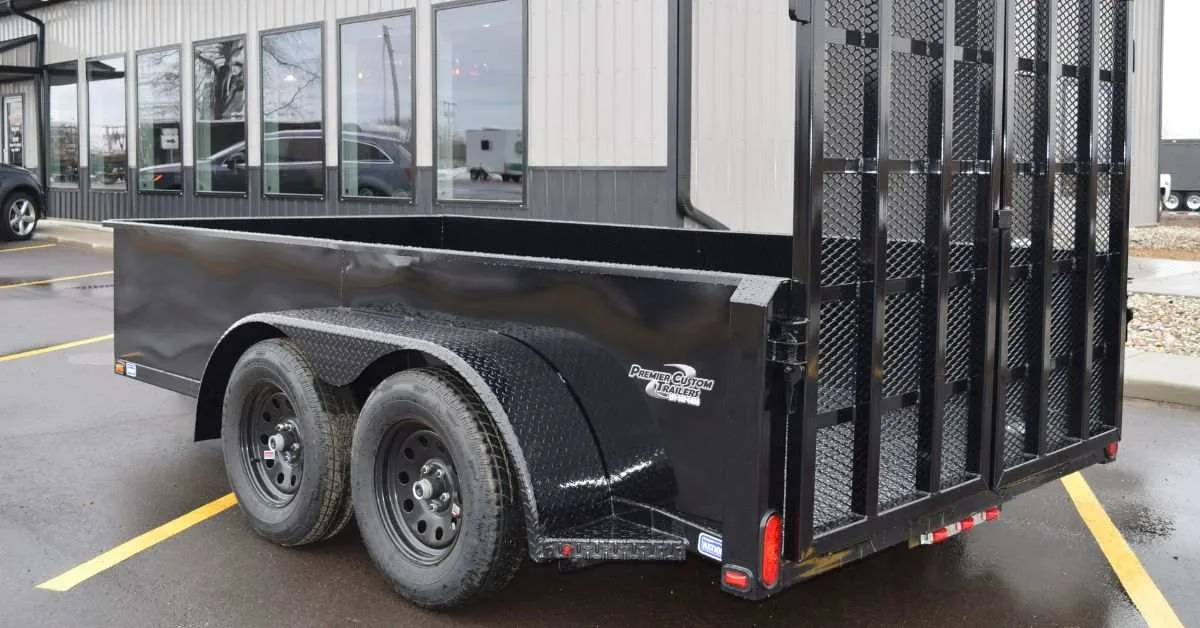
Proper securement is essential for transforming your loaded trailer into a safe transport system, especially when hauling a scissor lift. Premier Custom Trailers designs scissor lift trailers with strategically placed, engineered tie-down points that align with common attachment locations, ensuring safe and effective transport. Follow these key tips to secure your scissor lift properly:
- Use multiple attachment points and the correct tie-downs to handle regular driving forces.
- Select tie-down straps or chains rated for at least half your scissor lift's weight per strap. Ratchet straps are a good option for most cases.
- Use at least four attachment points, connecting straps from the trailer’s tie-downs to secure locations on the scissor lift.
- Attach straps only to the lift’s frame or approved tie-down points, avoiding hydraulic cylinders, electrical components, or movable parts. Refer to the scissor lift manual for exact attachment locations.
- Angle straps to create downward pressure while preventing forward, backward, and lateral movement. Avoid over-tensioning to prevent equipment damage.
- Double-check all attachment points before transport. Ensure the straps are tight and the buckles or ratchets are fully engaged.
Tips for Safe Transit
Once your scissor lift is securely loaded, your focus shifts to safe driving and monitoring during transit. Remember, hauling a trailer significantly changes your vehicle's handling, so adjusting your driving is crucial. To ensure a safe journey, keep these essential tips in mind:
- Plan Your Route Carefully: Before you even hit the road, check for bridge clearances, weight restrictions, and current road conditions. Your loaded trailer makes your setup taller, longer, and heavier, so routes typically suitable for your truck might not work.
- Adjust Your Driving Style: Accelerate gradually and brake much earlier than you normally would. The added weight means longer stopping distances and more time needed to get up to speed. Maintain extra following distance to give yourself more reaction time and reduce the need for sudden stops.
- Handle Corners with Caution: Approach corners and curves at a slower speed. Your trailer will track differently than your truck, so be mindful of its path to avoid curbs or drifting into other lanes. If you're new to trailer handling, practice low-speed maneuvers in a safe, open area.
- Perform Regular Load Checks: Make periodic stops to inspect your load, especially during the initial miles. Vibration and road forces can cause straps to loosen or shift. A quick visual check and a tug on the straps will ensure everything remains secure, giving you valuable peace of mind.
- Stay Aware of Your Surroundings: Constantly use your mirrors and understand how your extended vehicle combination affects lane changes and merging. Signal early and take your time when changing lanes, as other drivers might not anticipate the extra space your trailer requires. Maintain defensive driving habits at all times.
Unloading Procedures
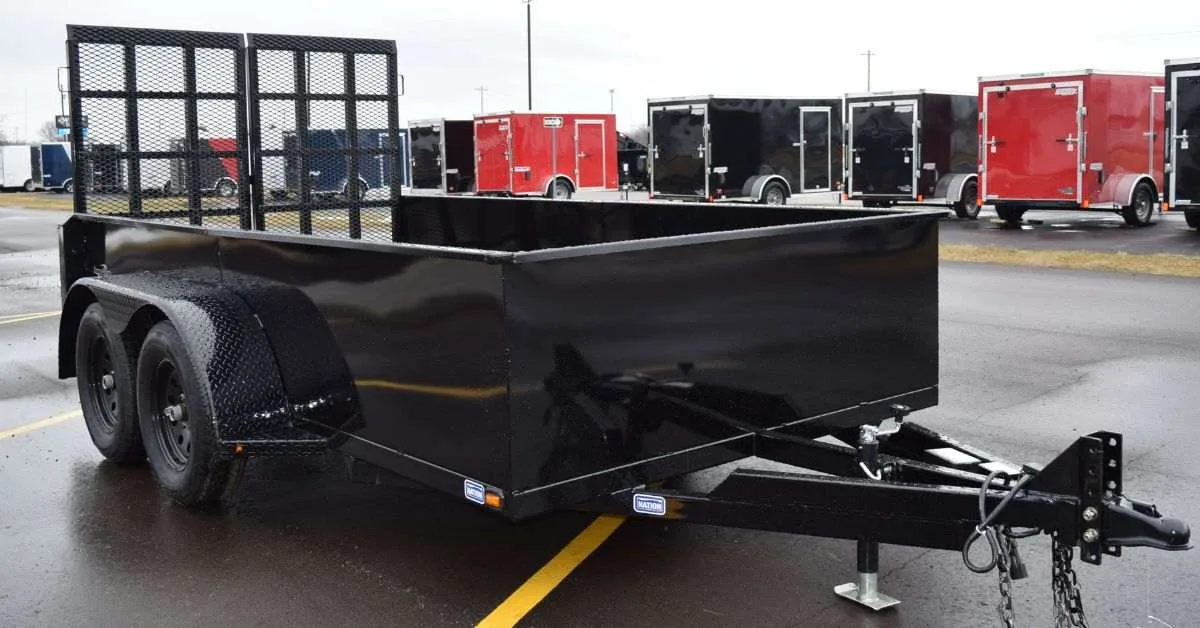
Arriving safely at your destination is only half the battle. Unloading requires the same careful attention as loading. It can be tempting to rush this process, especially after a long day, but accidents during unloading can be just as serious. To ensure a safe and smooth process, position your trailer on level ground with plenty of space, clear of any obstacles or unnecessary personnel.
Here are the key steps to follow for a safe unload:
- Inspect Before Releasing: Before touching any tie-downs, inspect the scissor lift's position. Equipment can shift during transport, so note any changes and adjust your unloading plan if needed.
- Release Tie-Downs Systematically: Start with the straps under the least tension. As you release them, position your body safely to avoid being struck if a strap snaps back. Coil and store straps immediately to prevent tripping hazards.
- Prepare Your Ramps: Deploy the trailer's ramps carefully, ensuring they are properly supported and aligned. Clean any oil, dirt, or moisture from the ramps and trailer deck to prevent slippery conditions.
- Warm Up and Check Controls: Start the scissor lift and let it warm up, especially in cold weather. Double-check that all controls are functioning correctly before you start moving it.
- Unload Slowly and Carefully: Back the scissor lift off the trailer slowly, keeping it straight on the ramps. Use a spotter if your visibility is limited, and establish clear hand signals beforehand to ensure a safe operation.
- Park Safely: Once the lift is clear of the trailer, park it in a safe location and perform any final operational checks before putting it to work.
Your Partner in Safe Scissor Lift Transport
Understanding how to transport scissor lifts safely requires the right equipment, proper procedures, and attention to detail throughout the process. From selecting the right trailer to completing unloading at your destination, each step contributes to a successful equipment transport that protects your investment and ensures everyone's safety.
Ready to upgrade your scissor lift transport capabilities? Explore Premier Custom Trailers' collection of trailers for scissor lifts and discover how the right equipment can transform your hauling operations.